Is Blue Light Really Ruining Your Sleep?
Evidence review updated: September 6, 2026.
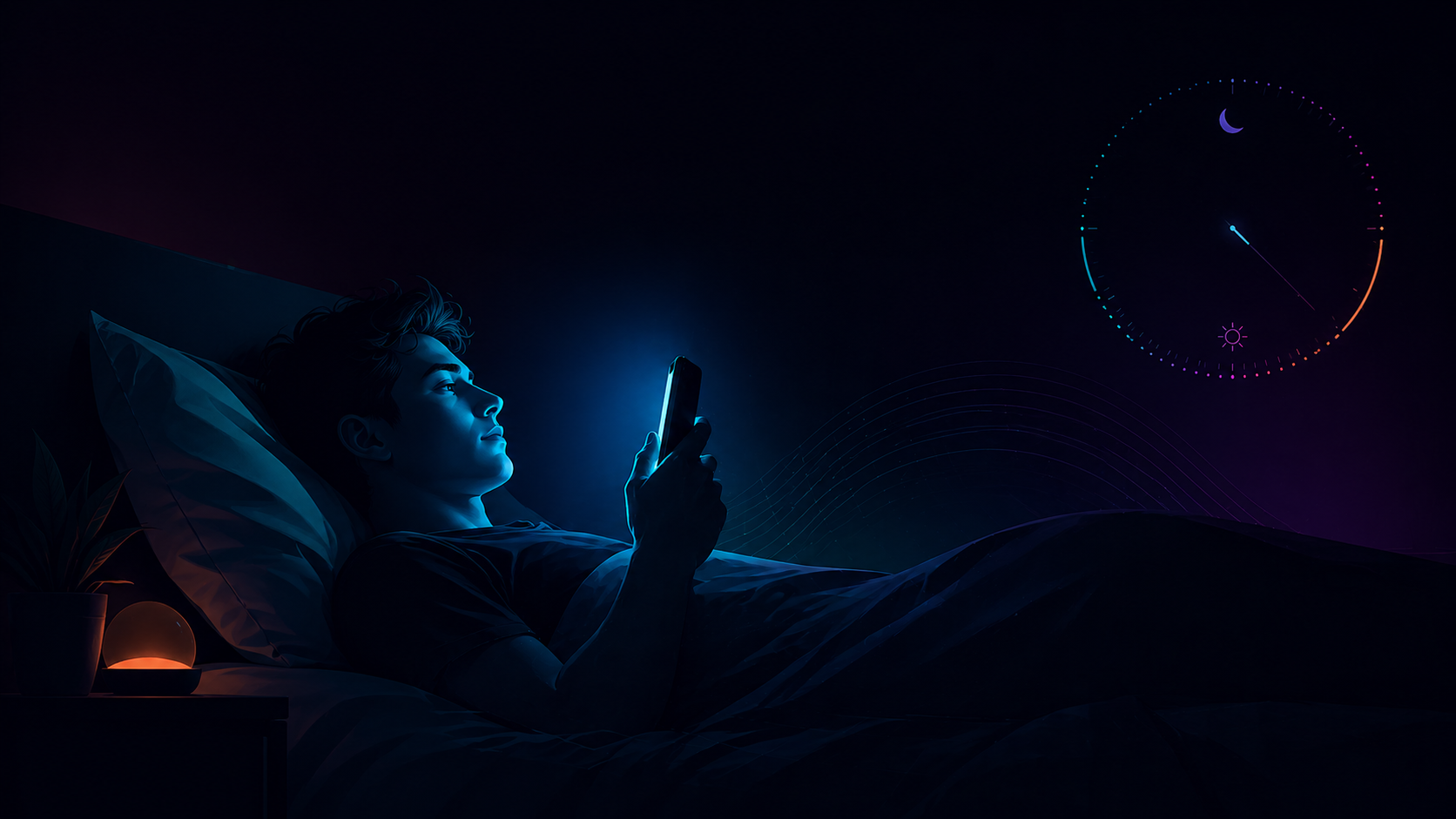
Light is an important signal for the circadian system. Bright light in the evening can delay sleep timing and suppress melatonin, while morning light can help anchor an earlier schedule. But “blue light” is not the entire screen-and-sleep story.
Phones and laptops can also keep people awake by displacing bedtime, encouraging alerting or emotional content, and delivering bright light close to the eyes. Night-mode filters reduce some short-wavelength light but do not remove those other effects, and they are not guaranteed insomnia treatments.
A practical experiment
If sleep is difficult, try a 30- to 60-minute wind-down with dimmer lighting and no stimulating work, games, or social media. Lower screen brightness, use a warmer display, and keep the device farther away. Get outdoor light after waking and maintain a consistent rise time.
The goal is not fear of every evening screen. It is to reduce light and stimulation when they delay your bedtime or make it harder to settle. Track the change for a week rather than judging one night.
If insomnia persists despite adequate opportunity and routine, seek clinical advice. Consumer devices cannot diagnose a circadian-rhythm or sleep disorder.