Sleep Stages: What They Mean—and What Trackers Cannot Tell You
Evidence review updated: September 6, 2026.
Sleep alternates between non-rapid eye movement (NREM) and rapid eye movement (REM) sleep. NREM includes three stages: the transition into sleep, established sleep, and deep or slow-wave sleep. REM includes active brain patterns and vivid dreaming. A typical night contains several cycles, with more deep sleep earlier and more REM later.
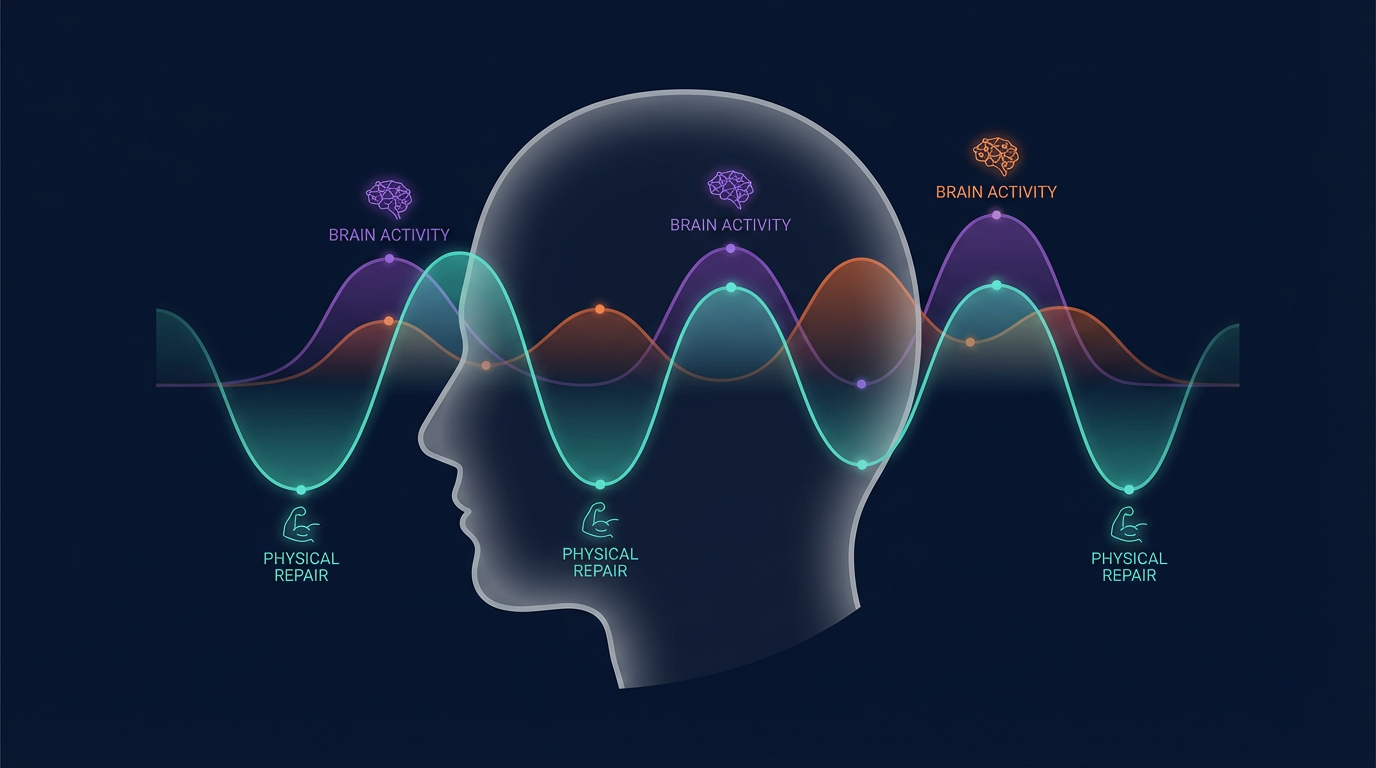
All stages are normal and useful. It is too simplistic to label light sleep as wasted, deep sleep as purely physical recovery, or REM as purely mental recovery. Sleep supports overlapping brain and body processes across the night.
Do not chase a stage percentage
Stage amounts vary with age, sleep timing, prior sleep, alcohol, illness, and other factors. There is no universal nightly deep-sleep or REM target that consumers need to hit.
Clinical sleep staging uses brain activity, eye movement, muscle activity, and other signals. Most consumer wearables infer stages from movement and cardiovascular signals. They can be useful for trends, but the AASM cautions that consumer sleep technology should not diagnose or treat sleep disorders.
Focus first on adequate duration, regular timing, and how you function during the day. If a device repeatedly reports unusual stages but you feel well, the estimate may be the issue. If you snore, gasp, struggle with persistent insomnia, or remain sleepy despite enough time in bed, talk with a clinician.